Unfortunately, you risk getting into a car accident in Fairfax at just about any time and at any location throughout the city. The injuries you suffer can leave you with exorbitant medical bills, lost income, and other damages, and you shouldn’t have to bear the costs if the accident was not your fault.
If another driver’s negligence caused an accident that injured you or someone you love in Fairfax, you likely qualify to pursue compensation from the at-fault driver and any other parties responsible for your injuries. However, you will need a car accident attorney for help and guidance with the complex and challenging injury claims process.
The Fairfax car accident attorneys at Right Path Law Group have many years of experience helping injured clients throughout our area obtain fair and full compensation for the injuries they sustained in a car accident someone else caused.
We can review your claim for free, advise you of your options, and fight for you to increase your chances of getting the favorable outcomes you expect and deserve. Contact us today for a free consultation.
Why Choose Our Fairfax Car Accident Attorneys
When choosing the right lawyer to handle your Fairfax car accident claim, you need to consider their experience and knowledge of local courts and procedures and the results they have obtained for other injured clients.
The attorneys at Right Path Law Group have served Fairfax County and the Northern Virginia region for more than 15 years, and we have obtained substantial compensation for our clients through insurance settlements and jury awards.
We are undaunted by large insurance companies and their teams of lawyers, and we promise to fight hard to help you get the maximum financial recovery you need. We also have extensive knowledge of and experience with Fairfax’s legal system, and we have the resources to handle your claim efficiently.
Call our Fairfax personal injury lawyers today or complete our online contact form for a free consultation concerning your car accident injury claim. We will treat you with the utmost compassion and dignity as we work to hold those who caused your injuries accountable.
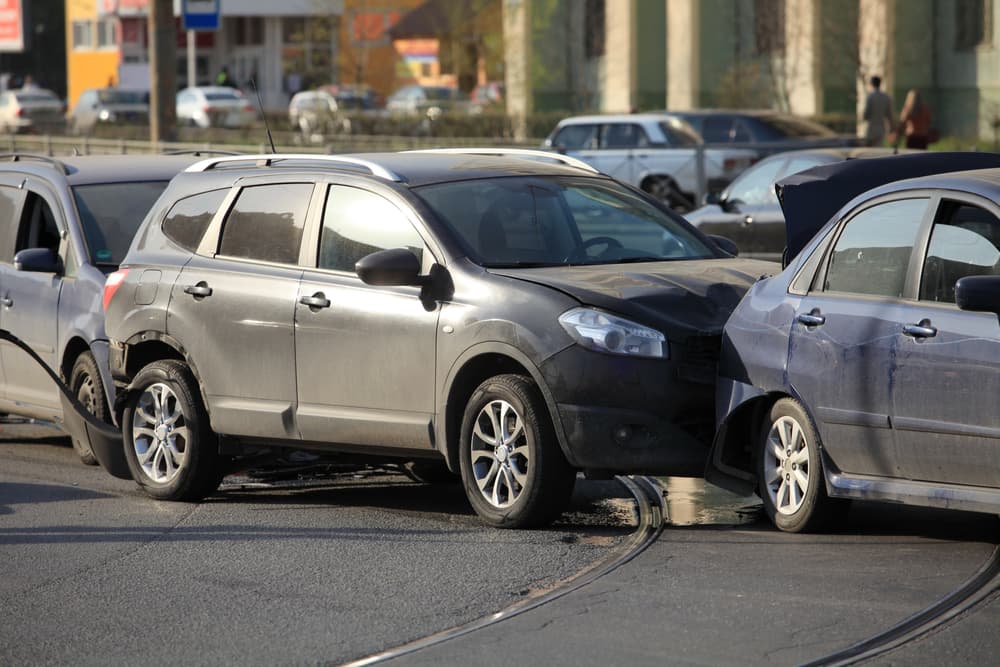
Common Types of Fairfax Car Accidents
Car accidents can occur in various ways and under different circumstances in Fairfax.
Here are some common types of car accidents that cause injuries to our clients at Right Path Law Group:
- Rear-end collisions: These occur when one vehicle collides with the rear of another vehicle. They often happen when the following driver fails to stop in time, such as at a red light or in heavy traffic.
- Head-on collisions: These are some of the most severe accidents and occur when the front ends of two vehicles collide. They often result from distracted driving or driving in the wrong lane.
- Side-impact collisions (T-bone): Side-impact collisions occur when one vehicle crashes into the side of another vehicle. They often happen at intersections when drivers run a red light or stop sign.
- Multi-vehicle pileups: These accidents involve three or more vehicles and often occur on highways or in adverse weather conditions. A chain reaction of collisions can result in significant damage and injuries.
- Single-vehicle accidents: These accidents involve only one vehicle and can include running off the road, hitting a fixed object (like a tree or pole), or rolling over.
- Rollover accidents: In rollover accidents, a vehicle tips over onto its side or roof. This type of accident can result from various factors, including excessive speed, sharp turns, or a collision.
- Sideswipe accidents: Sideswipe accidents occur when the sides of two vehicles come into contact. These accidents can happen when one vehicle attempts to change lanes without checking blind spots.
- Hit and run accidents: In hit and run accidents, one party leaves the scene without stopping to exchange information or render assistance. These accidents can make it challenging to identify and hold the responsible driver accountable.
- Distracted driving accidents: Accidents caused by distracted driving, such as texting while driving or using a smartphone, are increasingly common.
- Drunk driving accidents: Impaired driving due to alcohol or drugs can lead to accidents with severe consequences. These accidents are entirely preventable and often result in criminal charges for the impaired driver.
- Fatigue-related accidents: Drowsy driving can be as dangerous as drunk or distracted driving, leading to accidents when a tired driver loses focus or falls asleep at the wheel.
- Construction zone accidents: Accidents can occur in work zones due to reduced lanes, shifting traffic patterns, and driver inattention.
- Weather-related accidents: Adverse weather conditions like rain, snow, ice, or fog can lead to accidents due to reduced visibility and slippery roads.
Additionally, when a vehicle collides with a pedestrian, it’s considered a pedestrian accident. These can happen at crosswalks, intersections, or in parking lots. Furthermore, accidents involving bicycles and motor vehicles can result in severe injuries to cyclists. These accidents often occur when drivers fail to yield the right of way to cyclists.

Understanding the various types of car accidents can help individuals become more aware of potential risks on the road and take steps to prevent accidents. Safe driving practices, adherence to traffic laws, and avoiding distractions are essential for reducing the likelihood of car accidents.
If someone else’s carelessness or recklessness caused a car accident that injured you or a close family member in Fairfax, contact us as soon as possible for a free case evaluation.
Fairfax Car Accident Statistics
The Virginia Department of Transportation (VDOT) maintains traffic accident data for car accidents throughout the state.
For the most recent year available, VDOT published the following accident statistics for Fairfax:
- 437 total vehicle crashes, resulting in 153 injuries and two fatalities
- 18 total alcohol-related crashes, resulting in 12 injuries and one fatality
- 32 speed-related crashes that injured 18 and killed one
The Fairfax County Police Department has reported the following roads and intersections in Fairfax and the surrounding areas as among the most dangerous for car accidents:
- Gallows Road from Arlington Boulevard (Route 50) to I-66
- Main Street and Chain Bridge Road
- Braddock Road and Ox Road
- Centrewood Drive and Saint Germain Road in Centreville
- Lee Jackson Memorial Highway (Route 50) and Metrotech Drive in Chantilly
Overall, Virginia reports more than 65,000 car crashes yearly on average, and speeding, alcohol impairment, and distracted driving are often cited as the major contributors to injurious and fatal accidents throughout the state.
Contact an experienced Fairfax personal injury attorney from Right Path Law Group for a free consultation on how you can obtain compensation for the injuries another driver caused.
Common Types of Car Accident Injuries in Fairfax
Car accidents in Fairfax can result in a wide range of injuries, some of which can be severe and life-altering. The specific injuries sustained in a car accident can vary depending on factors such as the type of collision, the speed of the vehicles involved, the use of seat belts, and the use of safety features like airbags.
Common car accident injuries include:
- Whiplash: Whiplash is a neck injury that often occurs when a vehicle is rear-ended. It involves the rapid back-and-forth movement of the neck, which can lead to neck pain, stiffness, and headaches.
- Back injuries and spinal cord injuries: Car accidents can cause various back injuries, including herniated discs, injuries to the spine and spinal cord, and lower back strains.
- Head injuries: Head injuries can range from mild concussions to severe traumatic brain injuries (TBIs). Even minor head injuries can affect cognitive function and emotional well-being.
- Broken bones: Fractures of the arms, legs, wrists, and other bones are common in car accidents, especially in high-impact collisions.
- Cuts and lacerations: Broken glass, sharp objects, or debris from the accident can cause cuts and lacerations, which may require stitches or surgery.
- Internal injuries: Blunt force trauma in car accidents can result in internal injuries, such as internal bleeding, organ damage, or a ruptured spleen.
- Chest injuries: These can include rib fractures, chest contusions, or injuries to internal organs like the lungs or heart.
- Facial injuries: Car accidents can lead to facial fractures, dental injuries, or injuries to the eyes, nose, or mouth.
- Burns: Burns can occur if a vehicle catches fire or due to hot surfaces, liquids, or chemicals involved in the accident.
- Soft tissue injuries: These include injuries to muscles, ligaments, and tendons, such as sprains, strains, and contusions.
- Amputations and crush injuries: In some cases, car accidents may lead to traumatic amputations or partial amputations of limbs. If a body part gets trapped beneath the wreckage, it can cause crush injuries that may require amputation.
Along with physical injuries, car accidents in Fairfax can also cause psychological injuries. These injuries result from the emotional trauma of the accident and include post-traumatic stress disorder (PTSD), anxiety, and depression.
Additionally, some injuries can be so severe that they claim the victim’s life, and fatal car accidents often lead to wrongful death claims.

Seek immediate medical attention after a car accident, even if injuries seem minor, as some injuries may not be immediately apparent but can have long-term consequences.
Additionally, consulting with a healthcare professional and a personal injury attorney in Fairfax is crucial to assess and address any injuries and legal implications properly and provide the documentation you need to pursue a car accident injury claim in Fairfax.
What Should I Do After a Fairfax Car Accident?
After a car accident in Fairfax, it’s crucial to take specific steps to ensure your safety and well-being and to protect your legal rights.
Here is a step-by-step guide on what to do after a car accident:
- Ensure safety: First, check yourself and others involved in the accident for injuries. If anyone is seriously injured, call 911 immediately to request medical assistance.
- Move to a safe location: If possible and safe to do so, move your vehicle out of traffic to prevent further accidents or injuries. Turn on hazard lights to alert other drivers.
- Call the police: Regardless of the accident’s severity, contact the Fairfax County Police Department or the appropriate law enforcement agency to report the accident. You need a police report for insurance claims and legal purposes.
- Exchange information: Exchange contact and insurance information with the other parties involved in the accident. Obtain their names, phone numbers, addresses, driver’s license numbers, license plate numbers, and insurance policy details.
- Gather evidence: If it’s safe, take photos and videos of the accident scene, vehicle damage, skid marks, road conditions, and any visible injuries. This evidence can help with auto insurance claims and potential lawsuits.
- Collect witness information: If there are witnesses to the accident, obtain their names and contact information. Their statements may corroborate your account of the incident.
- Do not admit fault: Do not admit fault or discuss blame with the other parties involved. Even a simple apology can be misconstrued as an admission of guilt.
- Seek medical attention: Even if you don’t feel injured immediately, it’s advisable to undergo a medical evaluation. Some injuries, like whiplash or internal injuries, may not appear right away but can have long-term effects.
- Notify your insurance company: Report the accident to your insurance company immediately. Provide them with accurate and detailed information about the incident. Follow their instructions regarding the claims process.
Contact an Attorney

If you sustained injuries or significant property damage in a Fairfax car accident, consult a personal injury attorney in Fairfax as soon as possible. They can navigate the legal aspects of your case, negotiate with insurance companies, and pursue compensation if necessary.
You should also preserve evidence and share it with your attorney. Keep all documentation related to the accident, including medical records, repair estimates, and communication with insurance companies or other parties involved.
Other Steps You Should Take
Along with the steps mentioned above, keep the following steps in mind to help your chances of getting the maximum compensation you need:
- Follow medical advice: If you receive medical treatment, follow your healthcare provider’s advice and attend all follow-up appointments. Document your injuries, treatment, and medical expenses.
- Document lost income: If your injuries prevent you from working, keep records of missed workdays and lost income. This information may be necessary for a compensation claim.
- Be cautious with insurance adjusters: Be cautious when speaking with insurance adjusters. Consult an attorney before giving a recorded statement or settling with an insurance company.
- Know the statute of limitations: Be aware of the statute of limitations for filing a personal injury lawsuit in Virginia and consult with an attorney to ensure you meet the deadlines.
Every car accident is unique, so tailor your response to the specific circumstances. An attorney can provide valuable guidance and support while you deal with your car accident, especially if you intend to pursue a personal injury claim.
Fairfax Car Accident FAQs
Here at Right Path Law Group, we receive a lot of questions from clients about their car accident injury claims. Some questions we regularly hear from our clients include:
How Long Do I Have to File a Car Accident Injury Lawsuit in Fairfax?
In Fairfax and throughout Virginia, you only have a limited time to bring a lawsuit against the party responsible for the car accident and your injuries. For car accident injury claims, Virginia allows you to file a lawsuit in civil court two years from the accident date. Likewise, the statute of limitations for bringing a wrongful death claim is two years.
If you fail to have an attorney file your lawsuit within Virginia’s statute of limitations, you will likely forfeit your rights to pursue compensation, and the court will dismiss your case. Therefore, you have no time to lose in contacting a Fairfax car accident attorney and getting the process started.
How Much Does a Fairfax Car Accident Attorney Cost?
Like most personal injury lawyers, Right Path Law Group attorneys work on a contingency fee basis. This means we won’t charge you anything upfront to represent you, and we only accept a fee if we recover compensation for you through an insurance settlement or court award. You owe us nothing if we cannot recover damages on your behalf.
How Much Is My Car Accident Claim Worth?
Placing an exact value on your car accident claim is only possible with a full assessment of your damages and losses. Also, many factors can impact the types and amounts of compensation you can receive, including the severity of your injuries, the amount of insurance coverage available, and the willingness of the insurance company to negotiate a fair settlement.
A Fairfax car accident attorney from Right Path Law Group will thoroughly evaluate and calculate the damages you could receive and work diligently to help you get the maximum amount possible.
Why Do I Need a Fairfax Car Accident Attorney?
An experienced car accident attorney understands Virginia’s laws and procedures regarding personal injury claims, and they also understand how to deal with insurance companies and build a solid case to improve your odds of getting a successful outcome.
You do not want the added burden and stress of obtaining compensation without legal assistance—especially since you are also recovering from your injuries.
A lawyer can take care of all aspects of your claim, negotiate with the insurance companies to get the best settlement possible, or take them to court if necessary and represent you at trial so you can get the compensation you need.
Contact Right Path Law Group Today

If you suffered injuries or lost a loved one in a Fairfax car accident someone else caused, you are undoubtedly dealing with considerable medical bills and other financial losses, not to mention your pain and suffering. You do not have to face this ordeal alone.
Our lawyers at Right Path Law Group have more than 20 years of collective personal injury experience, and we are fully committed to your needs and helping you obtain the fair and rightful compensation you deserve.
Call us at (571) 556-8710 or contact us online to receive a free consultation from an experienced and effective Fairfax car accident attorney. You can also come by our Fairfax law office at 10387 Main St #204, Fairfax, VA 22030, to speak with an attorney for free.